Browse Items (24 total)
Sort by:
Quilt code
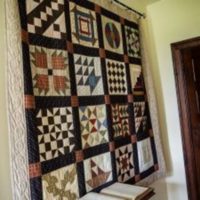
This quilt, on display in Jacksonville, Illinois' Woodlawn Farm historic site, is represented to illustrate the Underground Railroad's reliance on quilts to communicate secret information among fugitive slaves. Folk tales about such quilts claim that…
Come ride on the "Liberty Line"
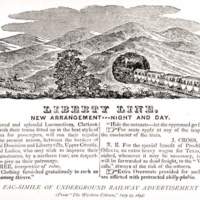
The advertisement offers free travel to Canada those “who may wish to improve their health and circumstances.” A WIURR conductor, John Cross, of Knoxville, submitted this widely reproduced illustration to the Western Citizen. In 1842 he had been…
A tombstone in a mixed raced community cemetery
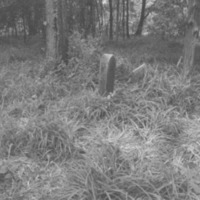
Photograph by the Illinois State Museum of the McWorter or Old Cemetery, where the remains of African American residents of Philadelphia, Illinois were buried. Philadelphia was a village in southwestern Illinois founded in 1836 by Frank McWorter, a…
Testimony of a conductor
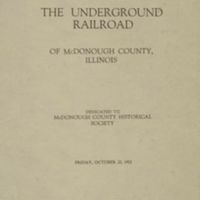
David Blazer, of Aledo, Illinois, shared his memory and specific details of the underground railroad activities of his father, uncle, grandfather, and of another family, the Allisons, in McDonough County, Illinois before the Civil War.
An Illinois freedom trail
The site focuses on western and southern Illinois sites Quincy, Jacksonville, and Alton, as well as Oakland and Chicago. Note that the site erroneously describes the underground railroad as active after the Civil War. Actually, with the end of the…
A national underground railroad map
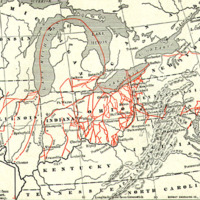
Western Illinois' UGRR routes show prominently in this map, including northeast from Quincy through the Military Tract counties to Princeton, the location of prominent UGRR conductor Owen Lovejoy.
Illinois early proslavery counties
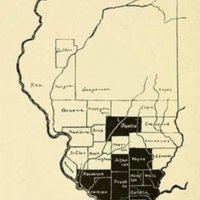
A map of Illinois free and slave counties in 1824 showing shaded counties that were favorable to legalizing slavery in Illinois
"Negroes" for sale
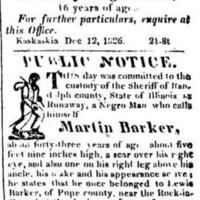
Public notices of availability of two African Americans for purchase, a sixteen-year-old girl, and a forty-three-year-old man. Parallel to the Underground Railroad, there existed a "reverse underground railroad," which, as in this item, targeted…
Illinois College's original building
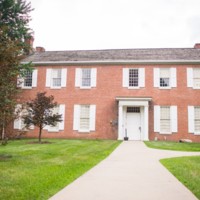
Beecher Hall, the original building of Illinois College, was completed in 1830. It was named for the college's first president, Dr. Edward Beecher, brother of the abolitionist preacher Henry Ward Beecher and the author of Uncle Tom's Cabin, Harriet…
A Quincy station
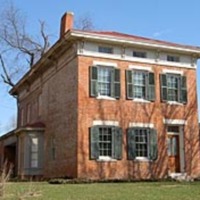
Dr. Richard Eells built this home, Quincy's oldest two-story building, now located within its Downtown Historic District, in 1835, four blocks from the Mississippi River. Quincy, Illinois, was the first Underground Railroad station across the border…